2026-2027 Catalog
Environmental Science & Resource Management Department
|
|
 Return to: Programs, Degrees and Departments Return to: Programs, Degrees and Departments
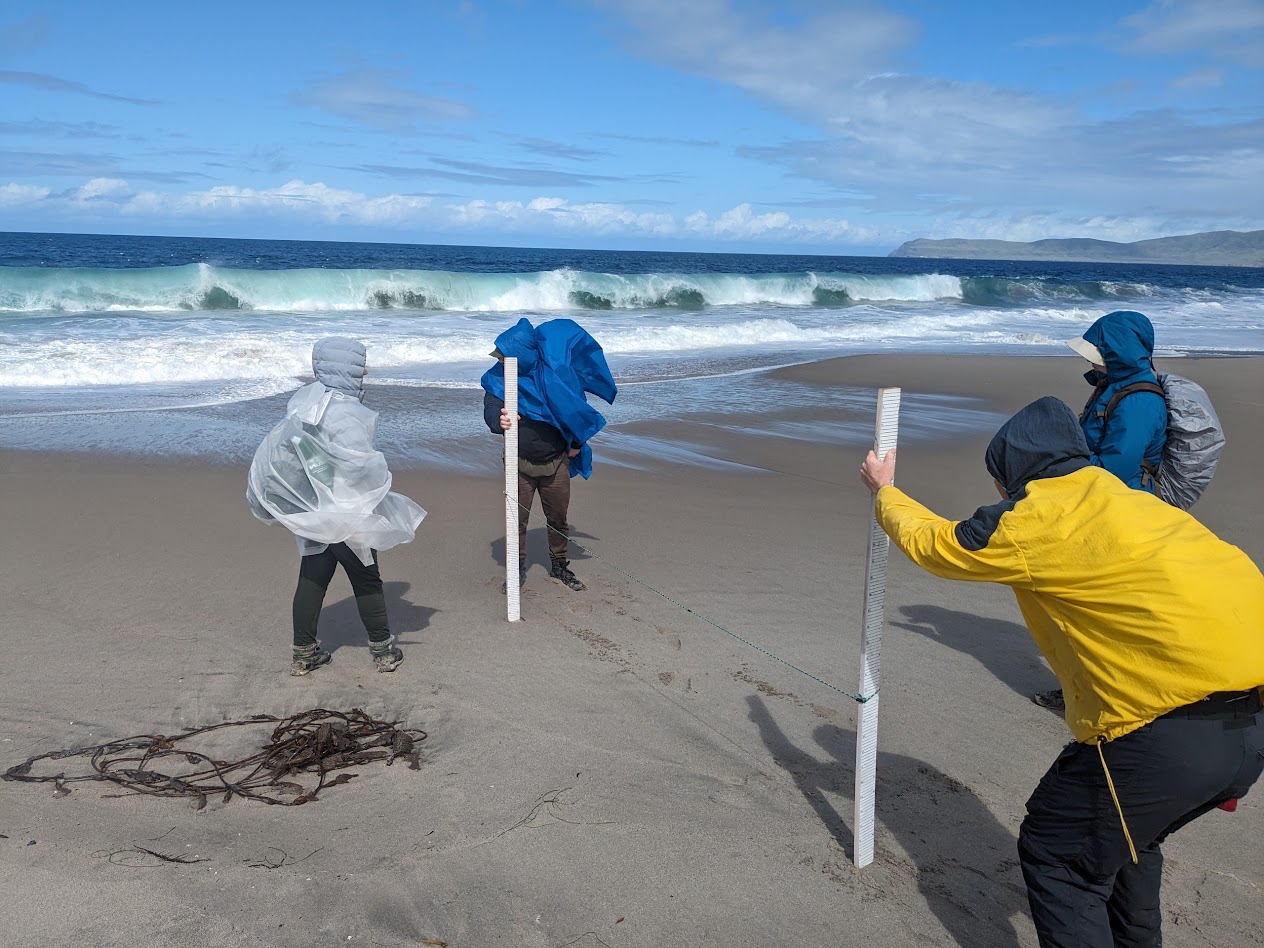
Environmental challenges demand solutions that cross disciplines, integrate technology, and consider political, economic, social, and justice dimensions. The Department of Environmental Science & Resource Management equips students with training in physical, biological, and social sciences, while applying management tools and technologies to reduce human impacts and sustain natural resources and communities. ESRM emphasizes hands-on, place-based learning grounded in real-world problem solving. The program’s location along California’s southern coast provides a living laboratory for studying coastal systems, climate impacts, environmental justice, and land and water management across diverse landscapes.
The department is committed to student mentorship, experiential education, and inclusive excellence. As part of a Hispanic-Serving Institution, ESRM prioritizes access, equity, and community engagement while maintaining rigorous academic standards and strong preparation for graduate study and professional pathways. Our alumni work in careers ranging from environmental planning, policy, and consulting to resource management with local, state, and federal agencies, to education and advocacy.
Program website | Program brochure
The ESRM department brings together faculty whose expertise spans the physical, biological, spatial, policy, and human dimensions of environmental systems. Drawing from diverse disciplinary backgrounds and methodological approaches, the department offers an integrated curriculum grounded in real environmental challenges.
Faculty strengths include coastal and watershed processes, geomorphology and sediment dynamics, freshwater and estuarine ecology, conservation biology, environmental chemistry, soils and contaminants, microplastics, climate-related hazards, and ecosystem responses to disturbance. This expertise supports teaching and research on shoreline change, habitat condition, water quality, contaminant pathways, species persistence, and hazard exposure across coastal, riverine, and terrestrial environments.
The department also maintains strong capacity in environmental governance and the social dimensions of resource management, including environmental policy and regulation, environmental justice, public access, sustainability planning, and land use. Students learn how scientific information informs planning, management, and policy at local, regional, and state scales.
Across the curriculum, students engage analytical and field-based tools appropriate to course objectives, including GIS and spatial analysis, remote sensing, environmental monitoring technologies, laboratory analysis, field sampling, and data interpretation. A hallmark of the program is close faculty-student mentorship through undergraduate research, independent study, capstone projects, service learning, and field-intensive experiences. Through small classes and collaborative learning, students develop technical competence, critical thinking, and the ability to apply environmental science to management, policy, and hazard mitigation in real-world contexts.
Student Opportunities
Students in Environmental Science and Resource Management (ESRM) engage in high-impact, hands-on learning that connects classroom instruction with real-world environmental challenges. Coursework emphasizes experiential learning through field-intensive classes in coastal systems, watersheds, geomorphology, ecology, environmental monitoring, and spatial analysis, with regular outdoor data collection and applied problem solving across Southern California landscapes.
A distinctive feature of the program is field-based learning in the Channel Islands, including course trips and research linked to the university’s presence on Santa Rosa Island. These experiences immerse students in island ecosystems, coastal processes, conservation issues, and land management challenges central to California’s environmental future.
Students participate in undergraduate research, service-learning, and community-engaged coursework in partnership with local organizations and public agencies. Internships with government and nonprofit partners further support professional development in environmental management, policy, conservation, and planning. Throughout the program, students build transferable skills in field and laboratory methods, data analysis, environmental communication, and teamwork.
Graduates pursue careers in government, nonprofit organizations, environmental planning, conservation, GIS and spatial analysis, education, and related fields, with many continuing to graduate or professional study in environmental science, policy, planning, and allied disciplines.
Faculty
Sean Anderson, Ph.D.
Professor and Program Chair, Environmental Science & Resource Management
Bell Tower West, Room 1265
(805) 437-8984
sean.anderson@csuci.edu
Kiki Patsch, Ph.D.
Professor, Environmental Science & Resource Management
Bell Tower West, Room 1191
(805) 437-2696
kiki.patsch@csuci.edu
Dan Reineman, Ph.D.
Associate Professor, Environmental Science & Resource Management
Bell Tower West, Room 1176
(805) 437-2079
dan.reineman@csuci.edu
Clare Steele, Ph.D.
Associate Professor, Environmental Science & Resource Management
Bell Tower West, Room 1181
(805) 437-1686
clare.steele@csuci.edu
Timnit Kefela Araya, Ph.D.
Assistant Professor, Environmental Science & Resource Management
Bell Tower West, Room 1131
timnit.kefela@csuci.edu
Dr. Brenton Spies, Ph.D.
Associate Teaching Professor
brenton.spies@csuci.edu
Russel Galipeau, Ph.D
Assistant Teaching Professor
russell.galipeau@csuci.edu
Contact Information
http://esrm.csuci.edu/
ProgramsMajor(s)Major(s) - AA/AS-T (Transfer Model Curriculum) Degrees OnlyMinor(s)Certificate(s)Roadmaps
Return to: Programs, Degrees and Departments
|
